
About Project of Heart
Project of Heart facilitates a safe space for reciprocal learning about the residential school system in Canada, a history that still has repercussions on Indigenous communities today. This program responds to the Calls to Action outlined in the Truth and Reconciliation Commission, and is identified as a recommended activity by the Commission.
Project of Heart was originally created by University of Regina (U of R) graduate student, Sylvia Smith, as part of her Master of Education program as a way to address the lack of teaching tools on Indigenous history in the school system.
How Project of Heart Supports Truth and Reconciliation
• Examines the history and legacy of the residential school system forced upon Indigenous people in Canada in order to seek the truth about that history and acknowledge the extent of loss to former students, their families and communities
• Commemorates, with the use of artistry and Indigenous ceremony, the lives of the thousands of Indigenous children who died as a result of the residential school experience
• Builds on our understanding of how residential schools contributes to the intergenerational trauma experienced across the Indigenous population of Canada
• Calls all Canadians to action, through social justice endeavors, to recognize our current as well as historic colonialist practices
• Builds right relationships, based upon truth and reconciliation, amongst all peoples with the intention to transform Canada from a colonized land to one built upon mutual respect and full autonomy for all
Luther College’s Role in Project of Heart
Luther College finances the Project of Heart eight-week evening workshops and encourages participation from faculty, staff, students, and community members as one of our institution’s responses to the Truth and Reconciliation’s 94 Calls to Action. To date, over 200 people have participated in Project of Heart at Luther College at the University of Regina.
“I was given the opportunity to participate in an engaged learning component and I jumped at the chance because I knew that getting out and doing something would be more interesting and rewarding to me than hours of research on the computer. Although there were many options, I chose to participate in Project of Heart because Aboriginal (sic) history is a very significant yet often ignored part of Canada….This was a way for me to participate in acts of reconciliation and acknowledge past wrongdoings. Project of Heart allowed me to be part of a group with a shared goal and to have practical experiences be a foundation of my learning.”
Mirella M.
POH Participant
Project of Heart 2026
Healthcare and the Children of the Qu’Appelle Industrial School
In this edition of Project of Heart, participants will learn about the health care that the children detained at the Qu’Appelle Industrial School received. This includes care provided by the school’s staff, along with other services and public health initiatives, such as the File Hills Colony Hospital, the Fort Qu’Appelle Sanatorium, and the Fort Qu’Appelle Indian Hospital. They will also hear about the Church’s and the State’s motivations for providing these services, while actively seeking to suppress local forms of knowledge and healing practices.
Although many of the stories in this series are from several generations ago, and the physical spaces where they unfolded have disappeared from the regional landscape and the settlers’ collective memory, this history still has repercussions on Indigenous communities today.
Details
Project of Heart will be offered weekly from January 26 to March 23, 2026. Facilitated by Veronique Mireault, the sessions will take place on Monday evenings from 6:30 to 8:00 p.m. in LC 207 at Luther College at the University of Regina.
This series is open to all and offered at no cost. Please direct any questions to Veronique.Mireault@uregina.ca
*Please note there will be no class on February 16, Family Day.
Thank you for the interest in Project of Heart 2026. Registration is now full and has closed.
A Few Definitions
Medical Colonialism:
Refers to a culture or ideology, rooted in systemic anti-Indigenous racism, that uses medical practices and policies to establish, maintain, and/or advance a genocidal colonial project.
Samir Shaheen-Hussain, pediatric emergency physician and author of the book Fighting for a Hand to Hold
Systemic Racism:
Systemic racism can be defined as policies and practices that exist throughout a whole society that leads to a continued unfair advantage to some people and unfair or harmful treatment or others based on race.
Systemic racism takes many forms including:
- When one group of people and their values, ways of doing things are classified as “normal” and other groups or people are “abnormal”.
- The political power to withhold basic rights from people of colour and use the full power of the state to enforce segregation and inequality, in practice.
- The social power to deny people of colour full inclusion or membership in associational life.
- The economic power that privileges white people in terms of job placement, advancement, wealth, and property accumulation.
Amnesty International
Week 1: Introduction
Suggested resource: None
Week 2: What were the conceptions of Indigenous health and the different practices before the introduction of colonial medicine? What did we try to take away?
Guest speaker: Nicholas Ironchild, White Raven Healing Centre
Suggested resource: None
Week 3: Dr. Peter Henderson Bryce and the history of whistleblowing in the residential school system.
Screening: Finding Peter Bryce: Story of a National Crime https://youtu.be/ETw4Zkv2FJ4?si=Msg6vgMJP2i_mH7b
Suggested resource: Podcast: One-on-one with “Clearing the Pains” author James Daschuk
https://mediaindigena.com/podcast-one-on-one-with-clearing-the-plains-author-james-daschuk/
Week 4: Health care as a right protected by Treaties.
Guest speaker: Aaron Tootoosis, Office of the Treaty Commissioner
Suggested resource: “The Treaty Right to Health: A Sacred Obligation” by Aimée Craft and Alice Lebihan
www.nccih.ca/Publications/Lists/Publications/Attachments/10361/Treaty-Right-to-Health_EN_Web_2021-02-02.pdf
Week 5: Colonial healthcare in the Qu’Appelle Valley: The Qu’Appelle Industrial School. What healthcare was available to the children – IRS hospital, File Hills Colony Hospital, Fort San, Fort Qu’Appelle Indian Hospital.
Guest speaker: Véronique Mireault and Dr. James Daschuk, University of Regina
Suggested resource: “We were Children” by Tim Wolochatiuk
https://www.nfb.ca/film/we_were_children/
Documentary Screening: “I Plowed the Sacred Soil” by Mark Dieter
Guest speakers: kêhtê-aya Lorna Standingready, Mark Dieter, Cheyanne Desnomie, Wilfred Dieter, Monte Verhulst
Week 6: The File Hills Colony
Guest speaker: Cheyanne Desnomie, First Nations University
Week 7: Colonial healthcare in the Qu’Appelle Valley: Discussion with survivors and living students
Guest speakers: kêhtê-aya Lorna Standingready, Barbara Lavallee, and Daryl Obey
Suggested resource: “The Cure was Worse” by APTN Investigate
https://youtu.be/o_Z11n9by-8?si=aUQk9PnZMRNgyWD7
Week 8: Presentation of the services and the approach at the All Nations Healing Hospital and the White Raven Healing Centre
Guest speaker: Kimberley Okeeweehow, White Raven Healing Centre
Suggested resource: None
For Further Learning
Books:
- An Act of Genocide: Colonialism and the Sterilization of Aboriginal Women, by Karen Stote https://fernwoodpublishing.ca/book/an-act-of-genocide
- Clearing the Plains: Disease, Politics of Starvation, and the Loss of Indigenous Life, by James Daschuk https://uofrpress.ca/Books/C/Clearing-the-Plains
- Colonizing Bodies: Aboriginal Health and Healing in British Columbia, 1900-50, by Mary-Ellen Kelm https://www.ubcpress.ca/colonizing-bodies
- Country of Poxes: Three Germs and the Taking of Territory, by Baijayanta Mukhopadhyay https://fernwoodpublishing.ca/book/country-of-poxes
- Fighting for a Hand to Hold: Confronting Medical Colonialism against Indigenous Children, by Samir Shaheen-Hussain https://fightingforahandtohold.ca/
- Healing Histories: Stories from Canada’s Indian Hospitals, by Laurie Meijer Drees https://ualbertapress.ca/9780888646507/healing-histories/
- Inuit, Oblate Missionaries, and Grey Nuns in the Keewatin, 1865-1965, by Frédéric Laugrand and Jarich G. Oosten https://www.mqup.ca/Books/I/Inuit-Oblate-Missionaries-and-Grey-Nuns-in-the-Keewatin-1865-19652
- Inventing the Thrifty Gene: The Science of Settler Colonialism, by Travis Hay https://uofmpress.ca/books/inventing-the-thrifty-gene
- Medicine that Walks: Disease, Medicine, and Canadian Plains Native People, 1880-1940, by Maureen Lux https://utppublishing.com/doi/book/10.3138/9780802082954
- Medicine Unbundled: A Journey Through the Minefields of Indigenous Health Care, by Gary Geddes https://heritagehouse.ca/products/medicine-unbundled
- Separate beds: A history of Indian Hospitals in Canada, 1920s-1980s, by Maureen Lux https://utppublishing.com/doi/book/10.3138/9781442613867
- Severing the Ties that Bind: Government Repression of Indigenous Religious Ceremonies on the Prairies, by Katherine Pettipas https://uofmpress.ca/books/severing-the-ties-that-bind
- Structure of Indifference: An Indigenous Life and Death in a Canadian City, by Mary Jane Logan McCallum and Adèle Perry https://uofmpress.ca/books/structures-of-indifference
- Taking Medicine: Women’s Healing Work and Colonial Contact in Southern Alberta, 1880-1930, by Kristin Burnett https://www.ubcpress.ca/taking-medicine
- The Genocide Continues: Population Control and the Sterilization of Indigenous Women, by Karen Stote https://fernwoodpublishing.ca/book/the-genocide-continues
- Wilful Neglect: The Federal Response to Tuberculosis among First Nations, 1867-1945, by Jane Thomas https://www.mqup.ca/Books/W/Wilful-Neglect
Articles:
- Administering colonial science: Nutrition research and human biomedical experimentation in Aboriginal communities and residential schools, 1942-1952, by Ian Mosby
- Medical colonialism and the power to care: unsettling participatory inclusion in the settler-state care paradigm, by Eva Boodman
- Starvation, Experimentation, Segregation, and Trauma: Words for Reading Indigenous Health History, by Mary Jane Logan McCallum
Newspapers:
- Bill aims to end the practice of forced sterilization https://kitchener.citynews.ca/video/2026/02/24/bill-aims-to-end-the-practice-of-forced-sterilization/
- CMA Apology A First Step Toward Healing Harms Against Indigenous People, Advocates Say by Bridget Stringer-Holden, CBC News
https://www.cbc.ca/radio/unreserved/medical-harms-indigenous-people-cma-apology-1.7355104 - CMA Apology ‘Could Have Gone Further’: Cree Doctor by Leanne Sanders, APTN News
https://www.aptnnews.ca/featured/cma-apology-falls-short/ - Confronting Residential Schools Denialism Is An Ethical And Shared Canadian Responsibility by Sean Carleton and Benjamin Kucher, The Conversation
https://theconversation.com/confronting-residential-schools-denialism-is-an-ethical-and-shared-canadian-responsibility-265127 - Construction begins on Indigenous-led healing space at children’s hospital in Winnipeg https://www.aptnnews.ca/national-news/construction-begins-on-indigenous-led-healing-space-at-childrens-hospital-in-winnipeg/
- Dental care benefits for First Nations and Inuit falling behind Canadian standards, say dentists https://www.cbc.ca/news/indigenous/nihb-dental-care-indigenous-9.7030503
- Feds put $1.5B towards Jordan’s Principle program https://www.aptnnews.ca/national-news/feds-put-1-5b-towards-jordans-principle-program/
- Former Patient Alleges Physical, Sexual Abuse at Sask. Tuberculosis Hospital by Allison Bambord, CTV News https://www.ctvnews.ca/regina/article/former-patient-alleges-physical-sexual-abuse-at-sask-tuberculosis-hospital/
- First Nations health ombudsperson concerned about the treatment of Indigenous patients https://youtu.be/ERbCOaVCL2A?si=BtRg7x6r6b74yRLb
- First Nations health ombudsperson seeks independent inquiry into hospital security practices https://thestarphoenix.com/news/local-news/first-nations-health-ombudsman-seeks-independent-inquiry-into-hospital-security-practices
- FSIN Throws Support Behind Class-Action Suit Over Tuberculosis Hospitals by Joel Willick, MBC Radio https://www.mbcradio.com/2022/02/fsin-throws-support-behind-class-action-suit-over-tuberculosis-hospitals
- Government’s Jordan’s Principle funding doesn’t go far enough: Blackstock https://www.aptnnews.ca/nation-to-nation/governments-jordans-principle-funding-doesnt-go-far-enough-blackstock/
- Here’s Whys Indigenous Reconciliation is Under Attack https://thetyee.ca/Analysis/2026/01/28/Indigenous-Reconciliation-Under-Attack/
- High demand leads Indigenous healing camp in Yellowknife to pause counselling services https://www.aptnnews.ca/national-news/high-demand-leads-indigenous-healing-camp-in-yellowknife-to-pause-counselling-services/
- ‘Indian Hospital’ settlement misses mark: prof https://www.brandonsun.com/local/2026/02/06/indian-hospital-settlement-misses-mark-prof
- InFocus: APTN Investigates reporter Kenneth Jackson uncovers a toxic legacy https://www.aptnnews.ca/infocus/infocus-aptn-investigates-reporter-kenneth-jackson-uncovers-a-toxic-legacy/
- Lafond calls for sweeping changes in treatment of Indigenous patients https://www.gx94radio.com/2026/01/26/lafond-calls-on-sweeping-changes-in-treatment-of-indigenous-patients/
- Mistreated: The legacy of Segregated Hospitals Haunts Indigenous Survivors by Lauren Pelley, CBC News https://www.cbc.ca/news2/interactives/sh/jTCWPYgkNH/mistreated/
- New HIV prevention guidelines say doctors should not be ‘gatekeeping’ PrEP https://www.aptnnews.ca/national-news/new-hiv-prevention-guidelines-say-doctors-should-not-be-gatekeeping-prep/
- No easy answer at roundtable on security at hospitals in Saskatchewan, more meetings ahead https://www.aptnnews.ca/national-news/no-easy-answers-at-roundtable-on-security-at-hospitals-in-saskatchewan-more-meetings-ahead/
- Nunavik health orgs call in Red Cross to fight TB outbreak as Quebec support falls short https://www.aptnnews.ca/featured/nunavik-calls-in-red-cross-to-fight-tb-as-quebec-help-falls-short/
- Search Finds Remains of a Child at Former Qu’Appelle Indian Residential School in Saskatchewan by Sara Connors, APTN News https://www.aptnnews.ca/national-news/search-finds-remains-of-a-child-at-former-quappelle-indian-residential-school-in-saskatchewan/
- Some Métis citizens in Saskatchewan losing faith in MN-S as mental health program cut https://www.aptnnews.ca/national-news/some-metis-citizens-in-saskatchewan-losing-faith-in-mn-s-as-mental-health-program-cut/
- Survivors of Abuse at Indian Hospitals Eligible for up to $200K in proposed settlement by Olivia Stefanovich, CBC News https://www.cbc.ca/news/politics/indian-hospital-federal-government-settlement-agreement-1.7475147
- The Definitive History of Canada’s Residential School Shame by Tyler Olsen, The Tyee
https://thetyee.ca/News/2025/09/30/Definitive-History-Canada-Residential-School-Shame/ - The Untold Story’: Effects Of Sask. Experimental Colony Still Felt On Peepeekisis Cree Nation by Stefanie Davis, CTV News https://www.ctvnews.ca/regina/article/the-untold-story-effects-of-sask-experimental-colony-still-felt-on-peepeekisis-cree-nation/
- Trevor Dubois filed healthcare treatment complaint months before his death, says First Nations Health Ombudsperson https://globalnews.ca/video/11638731/trevor-dubois-filed-healthcare-treatment-complaint-months-before-his-death-says-first-nations-health-ombudsperson/
- What Past Atrocities Teach Us about Residential School Burials https://thetyee.ca/Opinion/2026/02/04/Past-Atrocities-Residential-School-Burials/
- Pimicikamak leaders speak out after recovering youth removed from Winnipeg hotel https://www.youtube.com/live/I8yqblPgp5M
- Petition calls on Parliament to save files on residential school abuse before they’re destroyed
https://www.cbc.ca/news/indigenous/petition-residential-school-files-9.7114976 - What treating Kashechewan evacuees reveals about Canada’s drinking water crisis: Policy failure is an Indigenous health issue https://theconversation.com/what-treating-kashechewan-evacuees-reveals-about-canadas-drinking-water-crisis-policy-failure-is-an-indigenous-health-issue-274402
Maps/Visual Aids:
- Unmarked Burial Sites Associated with Indian Residential Schools
https://pathstoreconciliation.canadiangeographic.ca/unmarked-graves-and-burial-sites/#mainmap
Apologies:
- CMA Apology to Indigenous Peoples: Historical and Ethical Review Report
https://digitallibrary.cma.ca/media/Digital_Library_PDF/2024%20CMA’s%20apology%20to%20Indigenous%20Peoples%20-%20Historical%20and%20ethical%20review%20report%20EN.pdf
Reports:
- Sites of Truth, Sites of Conscience: Unmarked Burials and Mass Graves of Missing and Disappeared Indigenous Children in Canada, by Office of the Special Interlocutor
https://osi-bis.ca/wp-content/uploads/2024/11/1.OSI-Sites-of-Truth-Sites-of-Conscience.pdf - Jordan’s Principle
https://fncaringsociety.com/jordans-principle - Joyces’ Principle
https://principedejoyce.com/en/index
Websites:
- TRC Calls to Action Status: January 1, 2026
https://www.indigenouswatchdog.org/2025/12/06/trc-calls-to-action-status-may-13-2022/ - Finding Common Ground: A Treaty walk (&Roll) of Fort Qu’Appelle, Saskatchewan
https://storymaps.arcgis.com/stories/e90dc91809a048ec95c2cfcc9a4b7492h - History of Health in Saskatchewan: An Interactive Timeline – 1782-1966
https://www.tiki-toki.com/timeline/entry/1445970/History-of-Health-in-Saskatchewan-An-Interactive-Timeline-1782-1966/ - Manitoba Indigenous Tuberculosis History Project (report available)
https://indigenoustbhistory.ca/
Films/Videos:
- Beyond the Social: Chapter 19 with James & Patricia Makokis https://vimeo.com/206290000
- Confronting Medical Colonialism in Canada https://www.youtube.com/watch?v=1dwnt9Xhsn0
- Jordan River Anderson: The Messenger https://www.nfb.ca/film/jordan-river-anderson-the-messenger/
- Restrictive Health Care Access for Indigenous Peoples https://youtu.be/PQrkVpVXecY?si=qXYrkocW6vm_7eqk
- Systemic Racism in Canadian Healthcare: The Tragedy of Brian Sinclair and Joyce Echaquan
- The Cure was Worse https://youtu.be/o_Z11n9by-8?si=zWYkXzm8SU1jZFl-
- Truth Before Reconciliation: How to Identify and Confront Residential School Denialism https://youtu.be/hnfE5wC8MWM?si=m5giIWyIPY81lJZL
- TRW 2024 Lunch & Learns: Health Related Impacts of the Residential School System, by the NCTR https://www.youtube.com/live/sJfnA1GAFcY?si=sFplevF0JHxafKVO
- We Were Children https://www.nfb.ca/film/we_were_children/
Podcasts:
- Cindy Blackstock Update on Jordan’s Principle https://youtu.be/l0ykUtXCSvY?si=L82l8z-tCoDzcLOC
- Confronting Systemic Racism in Healthcare by Empowering First Nations Governance https://youtu.be/0LeKj3FVwZk?si=8ISBxKfg2y4oEkJv
- The Story of a National Crime (listening guide and discussion questions available)
https://knockaboutmedia756271764.wordpress.com/
Historical Documents:
Photo Gallery
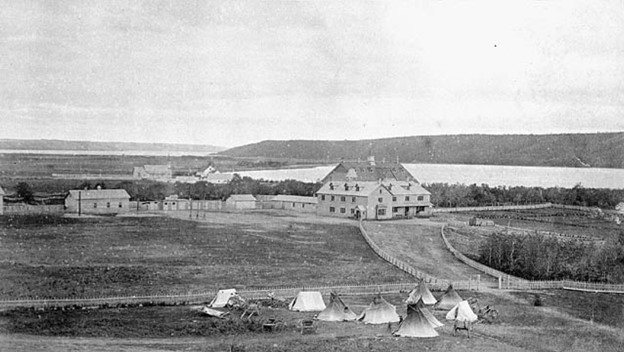
The Qu’Appelle Indian Industrial School, Saskatchewan, 1885
Source: https://www.collectionscanada.gc.ca/canadian-west/052920/05292006_e.html

The Qu’Appelle Industrial School, 1907
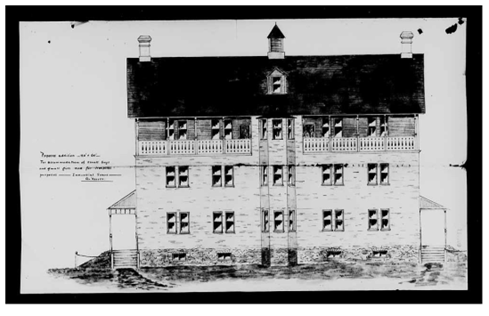

The Qu’Appelle Industrial School’s hospital (plans), 1894
Source: Plan of the proposed addition, February 25, 1894, RG 10, Volume 3917, file 116, 575-5, Library and Archives Canada, Ottawa, On, Canada.
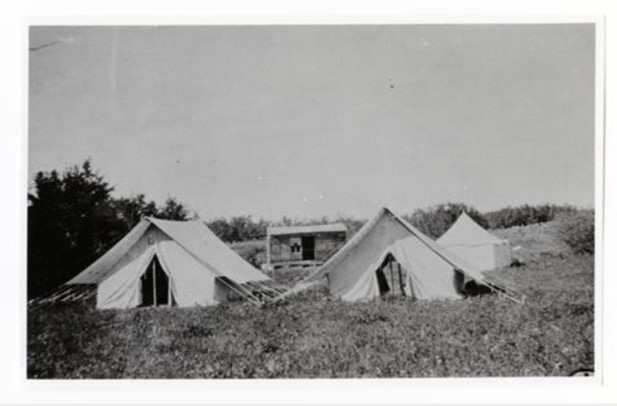
Sanatorium tents at Touchwood Agency, ca. 1900
Source: https://search.saskarchives.com/sanitorium-tents-at-touchwood-agency
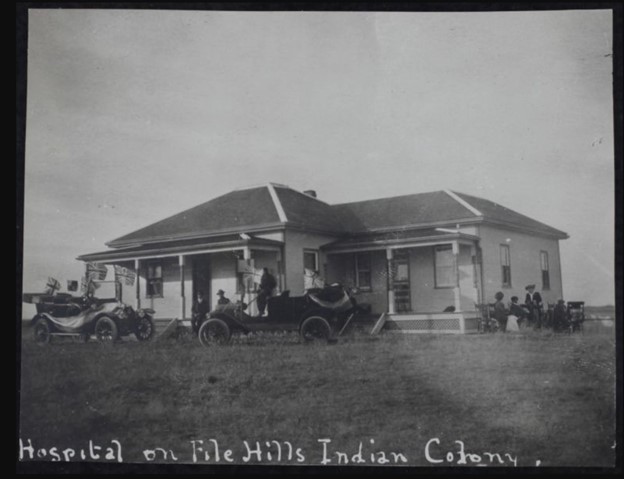
Hospital on the File Hills Colony, 1900s
Source: https://search.saskarchives.com/hospital-at-file-hills-colony
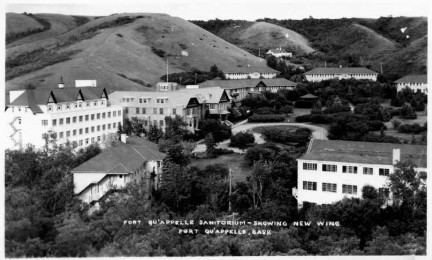
Fort Qu’Appelle Sanitorium, 1928
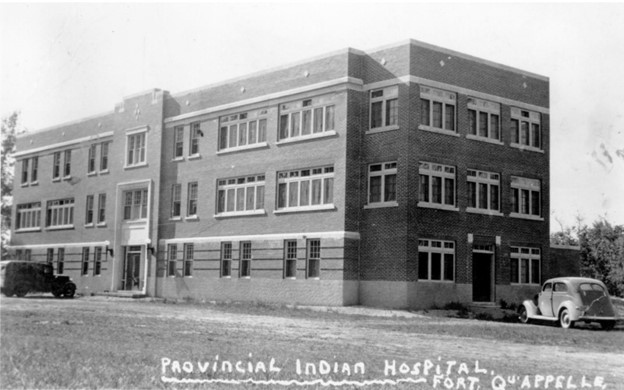
The Fort Qu’Appelle Indian Hospital, nd.