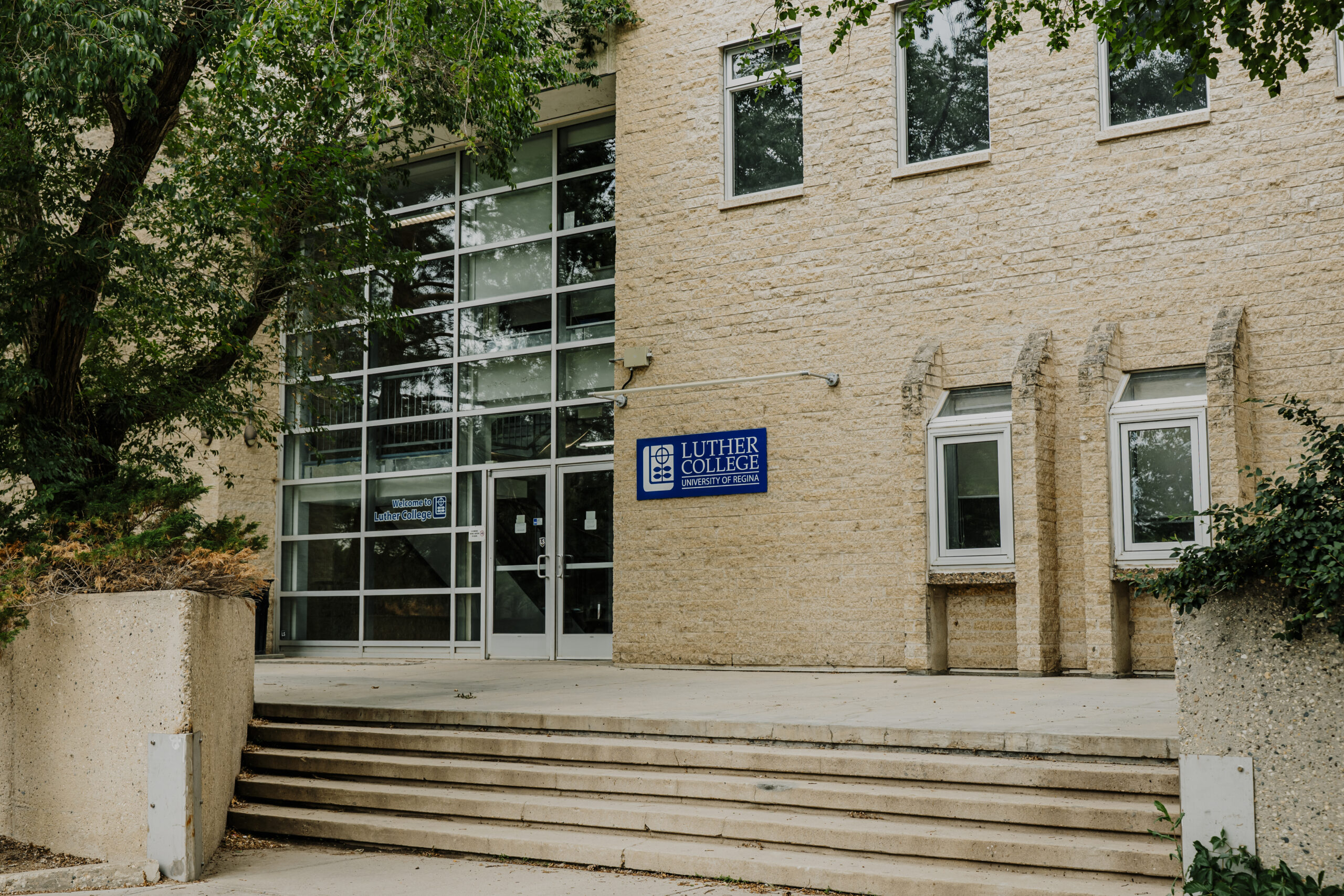
Discover Your Path in the Faculty of Science
At Luther College, you can pursue a Bachelor of Science (BSc) degree through the University of Regina’s Faculty of Science. Our programs are designed to build strong analytical, research, and problem-solving skills, while giving you hands-on experience that prepares you for scientific and professional careers.
Why Study Science at Luther College?
From psychology and biochemistry to computer science, applied physics, and pre-professional health sciences, Luther College students studying science through the University of Regina gain opportunities to develop practical skills in research and technology, collaborate in teams, and communicate scientific knowledge clearly to both scientific and non-scientific audiences. Many Bachelor of Science programs also offer co-operative education and internship opportunities, allowing you to earn while you learn by alternating between academic semesters and career-related work terms.
Our alumni have become successful forensic scientists, software engineers, optometrists, dentists, doctors, environmental biologists, and more!
Unique Academic Opportunities at Luther
Our course bundles help new students ease into university by offering a unique opportunity to take a few of your first-year courses with a group of likeminded people. This gives you the chance to gain valuable insight from multiple perspectives while making friends as you all progress together!
Speak to your Academic Advisor to learn about how to enrol in the English-Science Bundle!
English-Science Course Bundle
For pre-professional health sciences students, or if you love science.
An English class that focuses on scientific themes and technical writing.
A package of courses to prepare for a variety of pre-professional entrance exams.
Runs two semesters (Fall & Winter) and includes required BIO, CHEM and ENGL.
Includes a smaller Biology class to get you started on the right track.
Study in a group of 36 students all taking the same classes and labs together.

How to Enrol in the English-Science Bundle at Luther College
First, apply to your program of choice! Once you’re admitted, you’ll have a chance to book an appointment to meet with our advisors. The bundle is filled on a first-come, first-served basis once registration opens. Let your academic advisor know you want to be a part of the bundle cohort.
Scholarships & Awards For Science Students
As a Luther student, you’re eligible for exclusive Luther scholarships and awards—on top of the awards and scholarships available through the University of Regina.
$1,000 – Bertram Fair Lundy Memorial Scholarship
$650 – Dr. Eugene W. Seitz Scholarship
$750 – William & Erna Stan Memorial Scholarship
Plus, high school, mature student entrance scholarships and more!
Programs Offered
Luther College students can complete a Bsc in the same programs available through the University of Regina’s Faculty of Science.
Popular Programs Include:
Computer Science
Biology
Psychology
Biochemistry
Geography
Science Degrees
- Bachelor of Science (BSc)
- Bachelor of Science Honours (BScHons)
- Bachelor of Science program in Chemical Technology (BSc) – with Saskatchewan Polytechnic
- Bachelor of Science in Environmental Biology (BScEnvBiol) – with Saskatchewan
- Polytechnic or Lethbridge College or Lakeland College
- Bachelor of Science Honours in Environmental Biology (BScHonsEnvBiol) – with Saskatchewan Polytechnic or Lethbridge College or Lakeland College
- Bachelor of Science in Indigenous Environmental Science (BSc) – with First Nations University of Canada
- Bachelor of Medical Laboratory Science (BMLS) – with Saskatchewan Polytechnic
- Bachelor of Medical Radiation Technology (BMRT) – with Saskatchewan Polytechnic
Science Diplomas
- Diploma in Computer Science
- Diploma in General Science
Science Certificates
- Foundations of Science
- Indigenous Health Studies
Science Subjects
Actuarial Science
Are you a math and statistics whiz who is interested in projecting potential outcomes? Actuaries touch all aspects of our lives, from designing insurance and pension programs to working with professional sport teams.
This program will give you a strong statistical and mathematical background in preparation for most of the courses required by the Society of Actuaries and the Casualty Actuarial Society. The program involves a one-year internship so you can gain work experience before completing your undergraduate degree.
Sample Courses:
Econometric Models and Forecasts; Risk Theory; Introduction to Casualty Insurance and Credibility; Mathematics of Finance; Canadian Pension Plan Review.
Career Opportunities:
Graduates work in the financial and insurance industries, benefits consulting firms and in positions such as risk assessment statistician, actuary, data analyst and industry researcher.
Biology
Environmental issues, the workings of the human body and photosynthesis are just a few of the areas you can explore in our biology program.
Our Department of Biology offers instruction by some of the best scientists in Canada and is recognized internationally as a leader in plant and animal science. Our graduate and undergraduate research is ranked in the top one percent of all plant and animal science departments in the world!
As a biology student you will design experiments and projects, conduct field and laboratory research and learn to think analytically and critically.
Optional Concentrations:
Cellular & Molecular Biology; Ecology & Environmental Biology.
Optional Combined Majors:
Biochemistry; Geography; Statistics.
Sample Courses:
Plant Physiology; Stable Isotope Ecology; Ecomuseums; Food Microbiology; Evolutionary Biology of Sex; Molecular Genetics; Animal Behaviour.
Career Opportunities:
Graduates pursue careers as biochemists, biotechnologists, ecologists, forensic scientists, pollution control specialists, toxicologists and quality assurance officers.
Biochemistry
You could be part of a research team whose main focus is the biosynthesis of natural products or membrane proteins and cell surface structures. If topics like this are of interest to you then you will love our biochemistry program! The program focuses on understanding living cells at the molecular level.
You will gain theory and practical knowledge in areas such as biophysics, molecular genetics and complex biological processes. As a biochemistry student you will expand your understanding of statistics and your ability to use your skills and knowledge in a laboratory context.
Sample Courses:
Metabolism; Enzymes; Biophysics; Molecular Genetics; Chemical Biology; Advanced Microscopy; Cell Signalling.
Career Opportunities:
Graduates work as gene technologists, medical lab technologists, biochemists, teachers, toxicologists and laboratory analysts.
Chemistry
Ever wonder how applying radiation can actually heal someone instead of hurt them, or how forensic scientists can determine the substance found at a crime scene?
As a chemistry student you will conduct chemical analyses, design, synthesize and test new chemical products and measure pollutants in the air, water and soil. You will develop analytical, problem solving, data interpretation, time management and communication skills through extensive hands on experience. In the study of chemistry you will also learn to think logically, creatively, and independently.
Sample Courses:
Organic Chemistry; Quantum Chemistry; Magnetic Resonance Spectroscopy in Inorganic Chemistry; Organometallic Chemistry of the Transition Metals; Modern Organic Synthesis; Computational Chemistry.
Career Opportunities:
Graduates work as pollution control specialists, research chemists, pharmaceutical chemists, pathology assistants, food scientists, immunologists and health and safety inspectors.
Computer Science
Computer Science teaches you all aspects of computing from coding to user-interfaces. As a student in this program, you will learn how to program computers for simple and complex tasks, how the Internet works and why computer viruses spread so quickly, how to use new controllers and devices to make your computer do exciting and unusual things, how to design computer graphics and animation and how video games are designed – you may even design one of your own!
The University of Regina’s programs have been continuously accredited since 1982 — longer than any other program in Canada.
Optional Concentration:
Business.
Optional Combined Major:
Mathematics.
Sample Courses:
Programming and Problem Solving; Object-Orientated Design; Digital Systems; Web Orientated Programming; Management Information Systems; Digital Systems Architecture.
Career Opportunities:
Graduates pursue careers as software developers, research analysts, system and security administrators, web communicators, artificial intelligence designers, web masters, computer aided designed technologists, intellectual property lawyers and computer graphics designers.
Economics
Explore how societies deal with economic problems and how they provide for the economic well-being of their citizens. Economics will help you gain a deeper understanding of how societies decide what goods and services to produce, which methods to use in production and to whom these goods and services will be distributed. It studies how limited resources are used to meet the world’s competing needs.
Optional Combined Major:
Statistics.
Sample Courses:
Government and the Economy; Monetary and Financial Crises; Economics of Sports; Health Care in Canada; Environmental Economics; Economics of Developing Countries.
Career Opportunities:
Graduates find jobs as research officers/analysts or in banking and finance as investment services officers or financial analysts.
Environmental Health and Science
Environmental health is a science that studies how natural and man-made environments influence human health and disease. The ENHS program is accredited through the Canadian Institute of Public Health Inspectors (CIPHI). This accreditation ensures the graduates will meet the criteria for eligibility to write the national exam for the Certificate in Public Health Inspection. Program options include a 4-year degree and an After-Degree.
Sample Courses:
Communicable Disease Control; Health Promotion & Administration; Food Hygiene & Protection; Human Environment Impact; Health Risk Assessment.
Career Opportunities:
Graduates find work in health regions, national health agencies, tribal health authorities, food and water safety organizations, and environmental protection agencies.
Geography
Imagine experiencing a refreshing Caribbean breeze while you survey land use in a Jamaican town. Picture the vista surrounding you as you investigate a stream in the boreal forest or see yourself examining how wet springs have impacted farm land in the Canadian prairies.
The study of geography allows you to determine how people interact with their environment. The discipline is diverse and is based upon a blend of both natural and social sciences.
Optional Combined Majors:
Biology; Geology.
Sample Courses:
Human Geography; Geography of the Third World; Political Geography; Geography of Recreation and Tourism; Geomorphology; Map and Air Photo Interpretation.
Career Opportunities:
Graduates find jobs in environmental and land use planning, parks and recreation, resource management, water use and meteorology.
Geology
Geology is the study of the processes and physical structure of the earth. As a geology student you will learn about the history of the earth, the materials we take from the earth and about the many different processes that impact our earth. This program takes a very practical approach and you will take advantage of the university’s access to drill core (rock samples) and other material provided by the Subsurface Geological Laboratory. Laboratory projects commonly examine practical problems and apply techniques used by working geologists.
Sample Courses:
Environmental Geology; Internal Processes of the Earth; Mineralogy; Paleontology; Earth System History.
Career Opportunities:
Graduates pursue careers as geophysicists, marine geologists, environmental geologists, survey geologists, hydrogeologists, oceanographers, paleontologists, soil scientists and seismologists.
Mathematics
Did you know mathematics is one of the oldest sciences? It is a unique subject in that it offers distinct clarity between right and wrong – math advances through the application of pure reason. Math is integral to many other sciences and as a result is an important program area for all science majors. Your studies will focus on calculus, matrix algebra and differential equations. Whether or not you choose a career as a mathematician, the reasoning skills you learn at a high level will help you in many other career choices.
Optional Combined Major:
Computer Science.
Sample Courses:
Topics in the History of Mathematics; Fluid Dynamics; Mathematical Problems, Ideas, and Personalities; Euclidean Geometry; Modern Algebra; Linear Optimization.
Career Opportunities:
Graduates pursue careers in applied mathematics (various fields, including finance, health, marketing and mining), finance, computer science, teaching, actuarial science, data coordination, research, market analysis and more.
Physics/Applied Physics
Physics is the basis of all other sciences and involves the study of space, time and energy. Physicists want to really understand how things work, in every detail and at the deepest level. This includes everything from elementary particles, to nuclei, atoms, molecules, macromolecules, living cells, solids, liquids, gases, plasmas, living organisms, the human brain, complex systems, supercomputers, the atmosphere, planets, stars, galaxies, and the universe itself. Some of the most famous scientists, including Einstein and Newton, were physicists!
Our program in applied physics is new and innovative. It combines the best of modern physics instruction with practical knowledge in related applied fields. This program is a co-operative effort between the University and participating industrial employers. These partnerships enable you to obtain hands-on, real world experience.
Sample Courses:
Heat and Thermodynamics; Atomic Physics; Health Physics; Modern Experimental Physics; Statistical Mechanics
Career Opportunities:
Graduates pursue careers in aeronautics and space industries, pharmaceuticals, nano-technology, synchotron research, and computer simulation, planetariums and diagnostic imaging.
Psychology
Psychology is the science of the mind; it explores the nature of human thought and behaviour. As a psychology student in the sciences you will specialize in courses in Neuropsychology. You will learn how people relate to each other and the world around them, while also learning about yourself. Psychologists tackle an array of questions about what makes us human; the answers they uncover challenge our assumptions and help us to understand our ever-changing world.
Sample Courses:
Memory; Learning; Foundations of Behavior; Forensic Psychology; Neuropsychology; Brain Mechanisms and Behaviour; Human Reasoning.
Career Opportunities:
Graduates find jobs in all sectors including social services, community development and outreach, education, employee development, human resources, marketing and policy analysis.
Software Systems Development
Do you enjoy solving technical problems or using simple programming languages to create your own computer games and software materials? The computer science program will give you the skills and abilities to create and design large software systems.
In this program you will learn about the design, implementation, testing, evolution and maintenance of software systems. You will explore the areas of computer architecture, software science and development and human-computer interaction.
Sample Courses:
Web Oriented Programming; Risk and Reward in the Information Society; Human Computer Communications; Animation Software Design; Computer Graphics.
Career Opportunities:
Graduates find employment as software designers, developers, project managers, software security analysts and technical support staff.
Statistics
Statistics is the science of collecting, classifying, presenting and interpreting data. As an undergraduate statistics student you will study the foundations of statistics, statistical methodology and data analysis. Studying statistics as an undergraduate provides you with a vast array of opportunities after graduation. For example statisticians with a bachelor’s degree are needed in industry, government and in academic institutions.
Optional Combined Majors:
Applied Mathematics; Biology; Economics.
Sample Courses:
Sample Theory; Categorical Data Analysis; Advanced Probability; Design and Analysis of Experiments.
Career Opportunities:
Graduates pursue careers as budget analysts, industry researchers, purchasing agents, contracts specialists and cryptologists.
“I took STAT 200 with Dr. Agasthian in my second year of my program, and it quickly became one of my most enjoyable courses. Her way of teaching was so clear and thoughtful, and she always took the time to make sure her students felt supported. As a psychology student, I appreciated how she made a challenging subject feel approachable and how her mentorship inspired me to push beyond my limits and believe in my potential. The foundation I built in that class now plays a key role in the research and advocacy I am involved in today.”